Showing posts with label #FatherStanleyRother. Show all posts

Wednesday, March 27, 2019

¡feliz cumpleaños Father Stan!


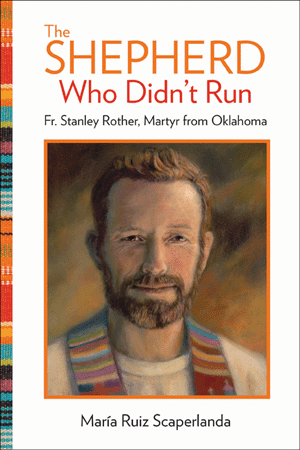
Today is the birth day of Blessed Stanley Rother, first U.S. martyr—and as you may recall, the subject of one of my biographies – “The Shepherd Who Didn’t Run: Blessed Stanley Rother, Martyr from Oklahoma.”

He would have been 84 years old.

I've blogged many times about Father Stan and his ministry to the Tz'utujil indians of Santiago Atitlán, Guatemala, for example here and here. And I have published several articles on him. Here’s one, and here’s another.

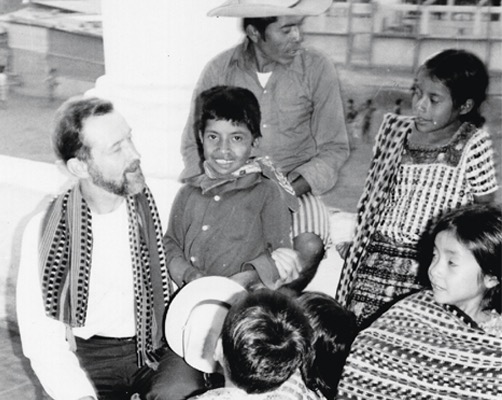
As a missionary priest serving in the Oklahoma mission in Santiago Atitlán, Padre Francisco, called Apla's by the Guatemala Tz'utujil indians, had a special place in his heart for the children. 

It's not difficult to see how this love, compassion and mercy manifested itself in his earnest commitment and ministry for the widows and the orphans during Guatemala's bloody civil war.


By the way, Our Sunday Visitor recently re-released a revised edition of my book, updating it to note Father Stan’s Beatification on September 23, 2017. Check it out here! The book is also available on Amazon for Kindle and as an Audiobook.

To join the cause, watch a beautiful documentary, or tell the story of a miracle, go to StanleyRother.org -- or contact me! I will point you in the right direction.


Monday, March 13, 2017

Blessed Stanley Rother of Okarche and Santiago Atitlán

I have many topics I want to tell you about... but this news trumps everything!

It is now official! Archbishop Coakley received official word this morning from Rome that Servant of God Father Stanley Rother will be beatified in Oklahoma City in September. 

Praised be Jesus Christ! 


Want to know more about the first American martyr?  

I humbly suggest my book, the first published biography on Father Stanley:  "The Shepherd Who Didn't Run: Fr. Stanley Rother, Martyr from Oklahoma"


Tuesday, December 13, 2016

it's official: the first U.S. martyr is from Oklahoma!


Even though I knew it was coming, I was overwhelmed with joy when the public announcement came from Rome that Father Stanley Rother has been approved for beatification.

This makes the Okarche native the first martyr from the United States, as well as the first priest from the U.S. AND the first male born in the U.S. to be approved for beatification!

You’ve heard me talk about him before. 

Father Stanley Rother was an Oklahoma priest who served for 13 years as a missionary pastor for the Oklahoma mission in Santiago Atitlán, Guatemala. In 1981, he was shot and killed in the rectory of the parish mission.

As the author of the first published biography of Father Stanley, I have been busy since the announcement answering questions and interviews about the Oklahoma martyr. 

In a very real way, however, it’s not about the book—and it’s not about me. It is such a privilege for me to be the one that helps spread Father Stanley’s beautiful story! 

I firmly believe that Father Stanley’s martyrdom is a much-needed witness for our Church today, a reminder that we are all called to holiness in our ordinary lives, and that holy men and women come from ordinary places like Okarche, Oklahoma!  

Here are the links to a few of the news sources I’ve been working with, and that you may enjoy:


My favorite radio interview so far took place in the NPR studio at KOSU with renowned journalist Gerry Bonds.  Drop by the show’s website any time to listen to our discussion on writing and Father Stanley Rother -- The Living Room with Gerry Bonds.

Ps. To purchase a copy of my book, 
"The Shepherd Who Didn't Run," 

+   +   +

Perhaps you feel like me, a bit perplexed that we are already roughly half way through Advent?

I am here to remind you that we still have time!  And to help you out, I am giving away – through the generosity of Magnificat Magazine – two free codes to Magnificat’s Advent App.

Just drop me a message here, on Facebook or via Twitter letting me know that you're interested—and I will randomly pick two lucky winners!


Tuesday, November 1, 2016

why I need saints


Last year Archbishop Oscar Arnulfo Romero y Galdamez of El Salvador was beatified. You may recall that Archbishop Romero was assassinated in 1980 as he celebrated Mass, just a day after pleading and ordering soldiers to stop killing innocent Salvadorians.

Ever since I first heard the news announcing Archbishop Romero’s beatification, I have found myself pondering why I need saints in my life.

I don’t mean just the holy people that have graced my spirit and shaped my life, like my dear Pat Stankus or my grandmother Josefita—but also the kind of holy that is proclaimed a saint by the universal Church.

First, let me be clear. I’m not trying to articulate—or defend—an intellectual, theological concept regarding sainthood

What I’ve been asking myself is much more tangible... and self-centered! I've been pondering, what is the point of proclaiming saints? what difference do these saints make to me?

Here’s what I’ve come up with...
  • I need saints because they intercede with God on my behalf. Theirs is the sort of passionate pleading akin to the mother I met years ago in Austin whose son was on death row in Huntsville. When the Governor of Texas refused to see her in person to hear her plead for a stay of his execution, the determined mother set up a tent to live in across the street from the Governor’s mansion, and she invited the local press, the local bishop, and anyone else who would listen, to join her in prayer and in peaceful demonstration.  Who doesn’t need this sort of passionate intercession?
  • I need saints because they connect me to others—across time and geography—and this constantly reminds me that my faith is little “c” catholic. I am not alone in my quest and desire to live for God. I have a cloud of witnesses that share with me this longing for God! And in addition, their stories remind me that -- no matter how much I screw that up (if you haven't heard, there are saints whose lives are worthy of a spicy HBO movie!) -- these are people who understand just how difficult it can be to live out this desire to live for God. They are saints because they never gave up trying!
  • I need saints like Archbishop Romero and Father Stanley Rother, our Oklahoma martyr, because being holy –and learning to live holy lives – is possible for everyone, no matter how ordinary. Romero and Rother, who died a year apart, became martyrs for the faith. But this final act, this witness of love, was possible because they had lived with a desire to respond in and through their faith to every person, every circumstance, every moment in their ordinary lives.

At the ceremony for Archbishop Romero’s beatification this week, the Cardinal who heads the Vatican’s Congregation for Saints’ Causes called Romero, "a bright star shining in the American spiritual firmament.” 

"And,” he added, “thanks be to God, there are many."


Father Stanley Francis Rother,
 Lake Atitlán, Guatemala

If you want to learn more about Father Stanley Rother, click here to order my book, "The Shepherd Who Didn't Run: Fr Stanley Rother, Martyr from Oklahoma."


[This post is an edited version of a May 2015 post in Day by Day with María]

Sunday, February 7, 2016

'The Shepherd Who Didn't Run' Blog Tour: Day 11, Susan Stabile

My husband Michael likes to say that my work (for 30 years now?!) in the Catholic press has brought into our lives some of our best and closest friends. 
It is certainly true that my work has blessed me/us with some phenomenal faith-filled people!
But it is his work as a law professor that I have to thank for bringing Susan Stabile into my life! 
Susan is a spiritual director, a retreat leader, a gifted writer, and yes, a law professor. Like me, Susan yearns for the ocean and loves the Camino de Santiago (which she walked a few years back!). 
One of the many things that I appreciate about Susan is how well she brings together in her writing and her speaking the many aspects of her life and her rich experience, allowing her faith journey and honesty to touch the hearts of many. Her book, "Growing in Love and Wisdom: Tibetan Buddhist Sources for Christian Meditation," is a great example of this! 
Do check out Susan's blog, appropriately titled, CREO EN DIOS!


Who is Father Stanley Rother?  Not a household name, except perhaps for the people in the state from which he hailed, and I knew nothing about him. My dear friend Maria Ruiz Scaperlanda, the incredibly talented and award-winning author and journalist, has done her part in rectifying our ignorance with her new book,The Shepherd Who Didn’t Run: Fr. Stanley Rother, Martyr from Oklahoma.
Given how many things are on my plate right now, it says a lot that once I picked up the book I did not put it down again until I finished it.  No small part of that is simply that Maria is a gifted storyteller who paints vivid descriptions of the man and the people who he served.
A large part of what compelled me, however, was the man himself.  Rother, once thought not smart enough to complete seminary studies to become a priest who seemed more at home tilling the fields or building retreat facilities than writing sermons, deserves to be remembered for his selfless commitment to his people, a commitment that led to his martyrdom.
Maria’s book takes us through Rother’s family background, his upbringing, his struggles in seminary and his early priesthood.  But the most compelling part of Rother’s life begins in 1968, when he was appointed to Oklahoma’s Guatemala mission team.  We learn from Maria about Rother’s growth in his life as a missionary.  One commentator observed that Rother “didn’t go there to do anything.  He went there to be there, with the people.  And because he was there, other things happened…like the school, and the clinic, and farming the fields.”  He was tireless in performance of his pastoral duties as well as developing cropland and other activities designed to better the lives of the poor in the area he served.
Alas, Guatemala during the time Rother was there began to look more and more like the El Salvador in which Oscar Romero ministered.  (And much of what I read about Rother reminded me of Romero.)  Violence and upheaval, massacres,  disappearances, persecution of the church as well as the people.  It was an increasingly dangerous situation, especially for those, like Rother, who raised their voices for social justice.
In early 1981, Rother made the last of his visits to his family.  At the time it was clear his life was in danger and most people believed he should not return to Guatemala.  He himself knew that if he returned he would be deported or killed.
But stronger than any fear or concern for his own safety, Rother felt, “I need to be with my people.  When warned not to return he said “My life is for my people.  I am not scared.”
And so he did return, much to the joy (and surprise) of the people he served and served with.  And he paid the ultimate price for doing so.
If you want to be inspired, if you want to look at the life of someone who truly deserves the label hero (as well as martyr), if you want an example of what it looks to give such a complete “yes” to God that you can accept whatever consequences flow from it, read Maria Scaperlanda’s book about this man, Fr. Stanley Rother, “the shepherd who did not run.”
I would also encourage you to take a look at Maria’s blog, which you can find here.


Friday, February 5, 2016

'The Shepherd Who Didn't Run' Blog Tour: Day 9, Karen Anne Mahoney

Our next stop on 'The Shepherd Who Didn't Run' Blog Tour is the beautifully titled blog, "Musings from an Irish Heart"by Karen Anne Mahoney!
Karen describes herself as a Catholic woman trying to live a holy life... as a wife, mother, grandmother and writer--much like me! I would also add that Karen is a generous, loving friend and a prayerful, faithful woman of faith. 
With thanks to Karen for joining this crazy cyber-tour... 
+   +   +
When I first learned about Maria Scaperlanda’s latest book, The Shepherd Who Didn’t Run,” admittedly, I was a little embarrassed because I had not heard of Fr. Stanley Rother, the Oklahoma priest murdered in Guatemala. As a Catholic writer, I felt as if I had missed the boat in not hearing about this incredible priest who was martyred for the Faith.
cover
Luckily for me, my friend Maria sent me this book and I was able to catch up. For those who think that martyrs were only around in “the olden days” think again. Fr. Stanley Rother is a modern day martyr who lived and died for the Faith.
Rother and his four siblings grew up on a farm in very rural Okarche, Oklahoma in a deeply religious family. He learned all aspects of farm life from his father and was expected to carry on in the family business. But one day, he startled his family when he opted for clerics and a bible rather than blue jeans and a pitchfork. Young Stanley was called to the priesthood.
The seminary was difficult for him as he was not the best student. Failing class after class, Fr. Stanley persevered, calling upon the intercession of St. John Vianney for assistance. He was sent to serve in rural Oklahoma, but was soon called to missionary work in Guatemala to serve the indigenous Tz’utujil community of Santiago Atitlán. The agricultural community was perfect for Fr. Stanley with his farming background. He worked alongside his parishioners to build a farmer’s co-op, a hospital, school and the first Catholic radio station. Through this station, catechizing even more remote villages was possible.
Rother-Children-(Larger)
Fr. Stanley was loved so much in his little village that he became known as Padre Francisco, and later called Padre Aplas. He was a quiet and faith filled man and one who reminds me a bit of Pope Francis for his kindness and willingness to selflessly serve others.
Unfortunately, the Guatemalan civil war encroached in the peaceful community that Fr. Stanley had now called home. Each day there was more violence, killings and disappearances. Santiago Atitlán became a dangerous place for Fr. Stanley due to his relationship and camaraderie with the people. There were many who wanted him to leave and to “encourage him,” death threats were levied upon his parishioners. His life was also threatened, but he didn’t want to abandon the people he loved so much. He often repeated the words of Jesus to reinforce his mission, “At the first signs of danger, a shepherd can’t run.” John 10
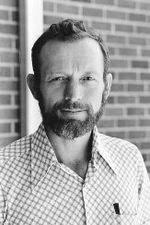
unnamed           For a short time, Fr. Stanley returned home to Oklahoma when the violence was at its vilest. His name had been placed on a death list and he was warned not to return to Guatemala. Not wanting to leave the people, he returned in time to celebrate Holy Week with his parishioners. Three months later, on July 28, 1981, he was sleeping in his library when three masked men entered the room in an attempt to kidnap and murder him. The invaders shot him twice, once in the jaw and once in the temple.
Through Fr. Stanley’s witness, we see his heart for Jesus, the Good Shepherd. A heart after the “one who gives his life for the sheep.”
To read the rest of Karen's post... go here!

Friday, January 29, 2016

'The Shepherd Who Didn't Run' Blog Tour: Day 2, Roxane B. Salonen


'The Shepherd Who Didn't Run' Blog Tour continues today over at Peace Garden Passage, a lovely blog by my friend and fellow-author Roxane Salonen!

+   +   +


ROXI’S REVIEWS: AUTHOR SCAPERLANDA GIVES INSIDE PEEK AT ‘THE SHEPHERD WHO DIDN’T RUN’


I knew about “The Shepherd Who Didn’t Run” well before I was asked to endorse it, and even, I assume, before the title was chosen. It’s author, Maria Ruiz Scaperlanda, is both a dear friend and skilled journalist and writer. She’s won awards for her work, but even more, she’s just a class act of a human being.
So prior to sitting down to read the account of Father Stanley Rother and his incredible, sacrificial life, which ended in his murder in Guatamela on July 28, 1981, I knew it would be a powerful read. The whole project, after all, was covered in prayer, and the subject himself, on his way to official sainthood within the Catholic Church.
I’m privileged today to share this Q & A with Maria, which gave me even more insight into the soul of a man whose story is going to undoubtedly affect many as deeply as it did me. (My Forum column from July 2015 tying Father Rother’s life and death with that of a young man from Fargo.)
So let’s get to it. My questions, and Maria’s answers.
Q. Maria, it was such a pleasure reading your book, “The Shepherd Who Didn’t Run.” I’ve found myself thinking about this servant of God often, and have shared about him with others. I’m so grateful to have his story in my heart and definitely see that this story was meant by God to come more fully into the light and our consciousness.
As I’m thinking about the story, I am wondering more about your role in it as the writer. I understand the story was attempted earlier, but that in time it was necessary to bring in another writer to bring it to fruition. How did you approach this daunting task? How did you first find out about Father Rother? And what helped you feel qualified to write his story? Was it something personal with which you connected?
A: First of all, thank you for this opportunity to share with your readers, Roxane!
The Church of Oklahoma has done a great job of making sure that the story of Father Stanley Rother is passed on from generation to generation. When my family first moved to the state 20 years ago, my kids (who attended Catholic schools here) came home talking about this local priest who died in Guatemala—and I became intrigued! I did a little digging and wrote a few articles about Father Stanley for various Catholic publications. Years later, when the Archdiocese opened the cause and began working on this project, I was invited to be part of the Historical Commission, mostly working with the Spanish documents.
I also had the joy to know Father David Monahan, whom I mention in the book and credit with being the first biographer of Father Stanley. Father Monahan was a gifted journalist (editor of the Archdiocesan newspaper, Sooner Catholic, for many years!) who worked for years collecting information and writing Father Stanley’s life story. Unfortunately, Father Monahan developed dementia and was unable to complete the book—or publish it.
When Archbishop Coakley commissioned me to write this book, I had full access to archdiocesan materials as well as to Father Monahan’s unpublished biography.
Trying to tell someone’s life story is, indeed, a daunting task! One of the things I had to let go of was the unrealistic notion that I would – or could — be telling the WHOLE story! Mine is Father Stanley’s first biography, but I assume not his last. If / when he becomes an official saint, I’m sure there will be many other books published about him. My task was to introduce readers to him by sharing my own experience and understanding of Father Stanley’s story.
+   +   +
Please drop by Peace Garden Passages to read the rest of our conversation! Just click here.