Showing posts with label #RotherServantofGod. Show all posts

Sunday, February 7, 2016

'The Shepherd Who Didn't Run' Blog Tour: Day 11, Susan Stabile

My husband Michael likes to say that my work (for 30 years now?!) in the Catholic press has brought into our lives some of our best and closest friends. 
It is certainly true that my work has blessed me/us with some phenomenal faith-filled people!
But it is his work as a law professor that I have to thank for bringing Susan Stabile into my life! 
Susan is a spiritual director, a retreat leader, a gifted writer, and yes, a law professor. Like me, Susan yearns for the ocean and loves the Camino de Santiago (which she walked a few years back!). 
One of the many things that I appreciate about Susan is how well she brings together in her writing and her speaking the many aspects of her life and her rich experience, allowing her faith journey and honesty to touch the hearts of many. Her book, "Growing in Love and Wisdom: Tibetan Buddhist Sources for Christian Meditation," is a great example of this! 
Do check out Susan's blog, appropriately titled, CREO EN DIOS!


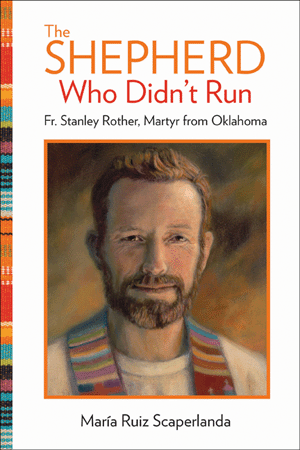
Who is Father Stanley Rother?  Not a household name, except perhaps for the people in the state from which he hailed, and I knew nothing about him. My dear friend Maria Ruiz Scaperlanda, the incredibly talented and award-winning author and journalist, has done her part in rectifying our ignorance with her new book,The Shepherd Who Didn’t Run: Fr. Stanley Rother, Martyr from Oklahoma.
Given how many things are on my plate right now, it says a lot that once I picked up the book I did not put it down again until I finished it.  No small part of that is simply that Maria is a gifted storyteller who paints vivid descriptions of the man and the people who he served.
A large part of what compelled me, however, was the man himself.  Rother, once thought not smart enough to complete seminary studies to become a priest who seemed more at home tilling the fields or building retreat facilities than writing sermons, deserves to be remembered for his selfless commitment to his people, a commitment that led to his martyrdom.
Maria’s book takes us through Rother’s family background, his upbringing, his struggles in seminary and his early priesthood.  But the most compelling part of Rother’s life begins in 1968, when he was appointed to Oklahoma’s Guatemala mission team.  We learn from Maria about Rother’s growth in his life as a missionary.  One commentator observed that Rother “didn’t go there to do anything.  He went there to be there, with the people.  And because he was there, other things happened…like the school, and the clinic, and farming the fields.”  He was tireless in performance of his pastoral duties as well as developing cropland and other activities designed to better the lives of the poor in the area he served.
Alas, Guatemala during the time Rother was there began to look more and more like the El Salvador in which Oscar Romero ministered.  (And much of what I read about Rother reminded me of Romero.)  Violence and upheaval, massacres,  disappearances, persecution of the church as well as the people.  It was an increasingly dangerous situation, especially for those, like Rother, who raised their voices for social justice.
In early 1981, Rother made the last of his visits to his family.  At the time it was clear his life was in danger and most people believed he should not return to Guatemala.  He himself knew that if he returned he would be deported or killed.
But stronger than any fear or concern for his own safety, Rother felt, “I need to be with my people.  When warned not to return he said “My life is for my people.  I am not scared.”
And so he did return, much to the joy (and surprise) of the people he served and served with.  And he paid the ultimate price for doing so.
If you want to be inspired, if you want to look at the life of someone who truly deserves the label hero (as well as martyr), if you want an example of what it looks to give such a complete “yes” to God that you can accept whatever consequences flow from it, read Maria Scaperlanda’s book about this man, Fr. Stanley Rother, “the shepherd who did not run.”
I would also encourage you to take a look at Maria’s blog, which you can find here.


Friday, February 5, 2016

'The Shepherd Who Didn't Run' Blog Tour: Day 9, Karen Anne Mahoney

Our next stop on 'The Shepherd Who Didn't Run' Blog Tour is the beautifully titled blog, "Musings from an Irish Heart"by Karen Anne Mahoney!
Karen describes herself as a Catholic woman trying to live a holy life... as a wife, mother, grandmother and writer--much like me! I would also add that Karen is a generous, loving friend and a prayerful, faithful woman of faith. 
With thanks to Karen for joining this crazy cyber-tour... 
+   +   +
When I first learned about Maria Scaperlanda’s latest book, The Shepherd Who Didn’t Run,” admittedly, I was a little embarrassed because I had not heard of Fr. Stanley Rother, the Oklahoma priest murdered in Guatemala. As a Catholic writer, I felt as if I had missed the boat in not hearing about this incredible priest who was martyred for the Faith.
cover
Luckily for me, my friend Maria sent me this book and I was able to catch up. For those who think that martyrs were only around in “the olden days” think again. Fr. Stanley Rother is a modern day martyr who lived and died for the Faith.
Rother and his four siblings grew up on a farm in very rural Okarche, Oklahoma in a deeply religious family. He learned all aspects of farm life from his father and was expected to carry on in the family business. But one day, he startled his family when he opted for clerics and a bible rather than blue jeans and a pitchfork. Young Stanley was called to the priesthood.
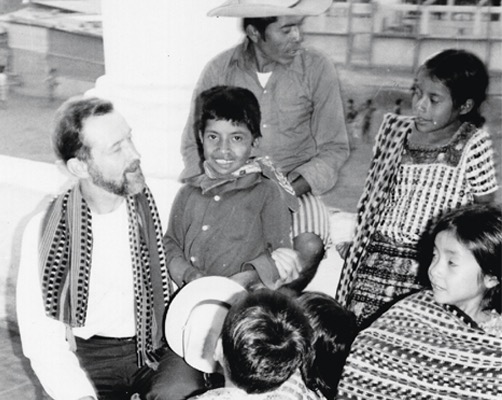
The seminary was difficult for him as he was not the best student. Failing class after class, Fr. Stanley persevered, calling upon the intercession of St. John Vianney for assistance. He was sent to serve in rural Oklahoma, but was soon called to missionary work in Guatemala to serve the indigenous Tz’utujil community of Santiago Atitlán. The agricultural community was perfect for Fr. Stanley with his farming background. He worked alongside his parishioners to build a farmer’s co-op, a hospital, school and the first Catholic radio station. Through this station, catechizing even more remote villages was possible.
Rother-Children-(Larger)
Fr. Stanley was loved so much in his little village that he became known as Padre Francisco, and later called Padre Aplas. He was a quiet and faith filled man and one who reminds me a bit of Pope Francis for his kindness and willingness to selflessly serve others.
Unfortunately, the Guatemalan civil war encroached in the peaceful community that Fr. Stanley had now called home. Each day there was more violence, killings and disappearances. Santiago Atitlán became a dangerous place for Fr. Stanley due to his relationship and camaraderie with the people. There were many who wanted him to leave and to “encourage him,” death threats were levied upon his parishioners. His life was also threatened, but he didn’t want to abandon the people he loved so much. He often repeated the words of Jesus to reinforce his mission, “At the first signs of danger, a shepherd can’t run.” John 10
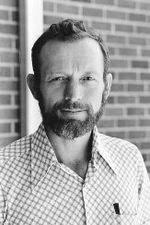
unnamed           For a short time, Fr. Stanley returned home to Oklahoma when the violence was at its vilest. His name had been placed on a death list and he was warned not to return to Guatemala. Not wanting to leave the people, he returned in time to celebrate Holy Week with his parishioners. Three months later, on July 28, 1981, he was sleeping in his library when three masked men entered the room in an attempt to kidnap and murder him. The invaders shot him twice, once in the jaw and once in the temple.
Through Fr. Stanley’s witness, we see his heart for Jesus, the Good Shepherd. A heart after the “one who gives his life for the sheep.”
To read the rest of Karen's post... go here!

Friday, January 29, 2016

'The Shepherd Who Didn't Run' Blog Tour: Day 2, Roxane B. Salonen


'The Shepherd Who Didn't Run' Blog Tour continues today over at Peace Garden Passage, a lovely blog by my friend and fellow-author Roxane Salonen!

+   +   +


ROXI’S REVIEWS: AUTHOR SCAPERLANDA GIVES INSIDE PEEK AT ‘THE SHEPHERD WHO DIDN’T RUN’


I knew about “The Shepherd Who Didn’t Run” well before I was asked to endorse it, and even, I assume, before the title was chosen. It’s author, Maria Ruiz Scaperlanda, is both a dear friend and skilled journalist and writer. She’s won awards for her work, but even more, she’s just a class act of a human being.
So prior to sitting down to read the account of Father Stanley Rother and his incredible, sacrificial life, which ended in his murder in Guatamela on July 28, 1981, I knew it would be a powerful read. The whole project, after all, was covered in prayer, and the subject himself, on his way to official sainthood within the Catholic Church.
I’m privileged today to share this Q & A with Maria, which gave me even more insight into the soul of a man whose story is going to undoubtedly affect many as deeply as it did me. (My Forum column from July 2015 tying Father Rother’s life and death with that of a young man from Fargo.)
So let’s get to it. My questions, and Maria’s answers.
Q. Maria, it was such a pleasure reading your book, “The Shepherd Who Didn’t Run.” I’ve found myself thinking about this servant of God often, and have shared about him with others. I’m so grateful to have his story in my heart and definitely see that this story was meant by God to come more fully into the light and our consciousness.
As I’m thinking about the story, I am wondering more about your role in it as the writer. I understand the story was attempted earlier, but that in time it was necessary to bring in another writer to bring it to fruition. How did you approach this daunting task? How did you first find out about Father Rother? And what helped you feel qualified to write his story? Was it something personal with which you connected?
A: First of all, thank you for this opportunity to share with your readers, Roxane!
The Church of Oklahoma has done a great job of making sure that the story of Father Stanley Rother is passed on from generation to generation. When my family first moved to the state 20 years ago, my kids (who attended Catholic schools here) came home talking about this local priest who died in Guatemala—and I became intrigued! I did a little digging and wrote a few articles about Father Stanley for various Catholic publications. Years later, when the Archdiocese opened the cause and began working on this project, I was invited to be part of the Historical Commission, mostly working with the Spanish documents.
I also had the joy to know Father David Monahan, whom I mention in the book and credit with being the first biographer of Father Stanley. Father Monahan was a gifted journalist (editor of the Archdiocesan newspaper, Sooner Catholic, for many years!) who worked for years collecting information and writing Father Stanley’s life story. Unfortunately, Father Monahan developed dementia and was unable to complete the book—or publish it.
When Archbishop Coakley commissioned me to write this book, I had full access to archdiocesan materials as well as to Father Monahan’s unpublished biography.
Trying to tell someone’s life story is, indeed, a daunting task! One of the things I had to let go of was the unrealistic notion that I would – or could — be telling the WHOLE story! Mine is Father Stanley’s first biography, but I assume not his last. If / when he becomes an official saint, I’m sure there will be many other books published about him. My task was to introduce readers to him by sharing my own experience and understanding of Father Stanley’s story.
+   +   +
Please drop by Peace Garden Passages to read the rest of our conversation! Just click here.

Wednesday, January 27, 2016

'The Shepherd Who Didn't Run' Blog Tour: Day 1, Rebecca Hamilton


There are many things about my work that bring me joy. But perhaps nothing compares to witnessing from the front row God’s attention to detail in every aspect of my life.

Take my latest book, for example. In every stage of the project, from research to writing to finding the right publisher, two things have been very clear: #1, this is/was my task to do; and #2, this is God’s project, and all I have to do is do my part.

Have I mentioned that the publisher for the book was also the first publisher to reject it?  Remind me to tell you that story sometime!

And now we are at the phasein the process that I have the least confidence in my ability – publicity, marketing, promoting.

The bottom line is simple. I am infinitely more comfortable working at my desk wearing pajamas than I will ever be standing in front of a group talking, or asking (aka. begging?!) writers or publications to help me spread the word on social media.

Yet once again, God reminds me that this is His project, and I am only called to do my part.  Not only did I not have to beg former Oklahoma legislator Rebecca Hamilton to write about my book in her blog, she offered to do so!


by Rebecca Hamilton


Maria Scaperlanda has written a wonderful book that is destined to be a sourcebook for one of the 20th Century’s most profound Christian martyrs.

The Shepherd Who Did Not Run tells the story of Father Stanley Rother, an Oklahoma farm boy who grew up to be a martyr for Christ in the on-going economic wars that are raging around the globe to this day. He died on July 28, 1981, at the hands of what were probably right-wing government assassins in an isolated mission village in Atitlan, Guatemala.

Before his martyrdom, Fr. Rother wrote a letter to his bishop explaining why he wanted to stay with his flock in Guatemala, despite the risks. In that letter, he made the famous remark, “A shepherd cannot run away.”

He knew the danger he was facing. In the same year he was murdered, the radio station he had founded was smashed and its director was tortured and killed. His catechists and parishioners would disappear and later be found, murdered. He knew that he, along with other Catholic priests, nuns and missionaries, was on a government death list.

Mrs. Scaperlanda’s biography was authorized by Archbishop Paul Coakley, the Archbishop of Oklahoma City. Fr. Rother’s family and friends shared their memories and experiences with her, allowing her to draw out the simplicity and the power of this man in the telling of his story.

The Shepherd Who Did Not Run is written in the clean prose of a writer who backs off and lets the story tell itself. Father Rother’s life unfolds in its pages in a way that inspires and uplifts the reader. It’s easy to see God working in the life of this man.

Read the rest of Rebecca Hamilton’s insightful blog post here.


Tuesday, January 26, 2016

the Shepherd Who Didn't Run Blog Tour!


Extra! Extra! Read all about it...

To spread the word about my new book, "The Shepherd Who Didn't Run: Fr. Stanley Rother, Martyr from Oklahoma," there will be a Blog Tour taking place for the next (almost) two weeks around the Catholic blogosphere!


If you've never heard of a Blog Tour, don't worry. It's also a new experience for me as an author! Think of it as a "progressive party" where we'll visit one new blog for a special treat every day. 
As the world-wide celebration of the Year of Consecrated Life comes to a close, I'm dedicating this Blog Tour to our Oklahoma Martyr, Servant of God Father Stanley Rother, and to the countless dedicated priests and vowed religious who enrich our world and our Church.
The way it will work is simple. Every day I will post a portion of the featured post, and invite you to visit each of the hosts at their "home" blog. 
Also, be sure to leave me a message here -- you could win a signed copy of "The Shepherd Who Didn't Run"! 
Today I'll begin by giving you a list of the Blog Tour hosts and the date for each visit.  

I've also included the wonderful Catholic Book Blogger entries from this past weekend... clearly, I don't want you to miss anything!  

The Shepherd Who Didn't Run Blog Tour Dates and Hosts:

January 21          Catholic Book Blogger 
                         at Patheos Catholic Channel– first, a review of the book                         
January 24          Catholic Book Blogger – and then a Q & A with me!
                           
January 27          Rebecca Hamilton's Blog at National Catholic Register
                        
January 29          Roxane Salonen at Peace Garden Passage
                         
January 30          Lisa Hendey at Catholic Mom

January 31          Meg Hunter-Kilmer at Held by His Pierced Hands

February 1           FranRossi Szpylczyn at There Will be Bread

February 2           Maria Morera Johnson at A Blog by Maria Johnson
                          
February 3           Woodeene Koenig-Bricker at Ordinary Time

February 4           Karen Edmisten at the Blog with the Shockingly Clever Title

February 5           Karen Anne Mahoney at Musings from an Irish Heart

February 6           Marge Fenelon at Marge Fenelon

February 7           Susan Stabile at Creo en Dios!

February 8           Donna-Marie Cooper O’Boyle at Donna-Marie Cooper O'Boyle